5 Herbs for Pregnancy and Postpartum
Our bodies are miracles.
The process of becoming pregnant, growing a baby, giving birth and recovering is astounding. And our bodies are designed for it.
But we often need some extra support along the way and herbs are a safe and effective way to do this.
Of course, there are way more than 5 herbs that can be used safely and effectively during pregnancy and the postpartum period. These are 5 well known and easily found herbs to explore.

Nettle (Urtica dioica)
Nettle (Urtica dioica)
Nettle is a gift. It is hands down one of the most nutritious plants around. Different parts of the plant are used but here it’s nettle leaf, which is what you would buy in a tea. You can also forage for it yourself, choosing the newer, more tender leaves.
Nettle has long been used as a female tonic in the Native American tradition.
Rich in minerals such as iron, magnesium, zinc and calcium it provides extra nutrition during pregnancy when you may become depleted. Good nutrition during pregnancy is so important and regular cups of nettle tea help provide power shots of easily digestible nutrients.
Best used as an infusion (in tea) and taken regularly, nettle is also high in vitamin K, which those of you who are pregnant may start to hear about in your birth choices.
Vitamin K helps with blood clotting and nettle can support your body to manage bleeding around the birth.
Nettle also supports the kidneys, helping ease the water retention that can be uncomfortable during pregnancy.
As a postpartum tonic nettle is essential. There is no other plant that can reach so deeply into an exhausted or depleted body. The nutrients in nettle support healing, vitamin K helps reduce bleeding and it supports the kidneys to reduce water retention that can happen in the postpartum period - particularly after a caesarean section.
Nettle is also a galactagogue, so it helps bring breastmilk in and retain its supply.
It is safe to drink larger amounts of nettle if you wish, but the recommended dose tends to be 1-3 cups per day.
Lemon balm (Melissa officinalus)
Lemon balm is like a cupful of sunshine.
As a plant it is easy to grow and it is the leaves that are used, picked just before flowering, which can be used fresh or dried.
It is a nervine, so it works directly on the nervous system, in a way that is calming but also uplifts the mood. Lemon balm is particularly indicated for low mood with tearfulness.
It is also a carminative, which means it works to relieve gas and bloating. Combined with chamomile it makes a calming tea which also soothes digestion. Lemon balm is also anti spasmodic and can ease cramping postpartum.
Combined with nettle, lemon balm can relieve allergy symptoms and is useful during hayfever season, particularly if you’re avoiding antihistamines pharmaceuticals.
Both during pregnancy and postpartum, anxieties can run high and moods low. Digestion is often disrupted in both states and lemon balm is a great herb to add to teas. And it tastes good, so it can be added to any of these others to help make it more palatable if needed.
Moderation is always a good approach, and during pregnancy one cup of lemon balm per day is enough.
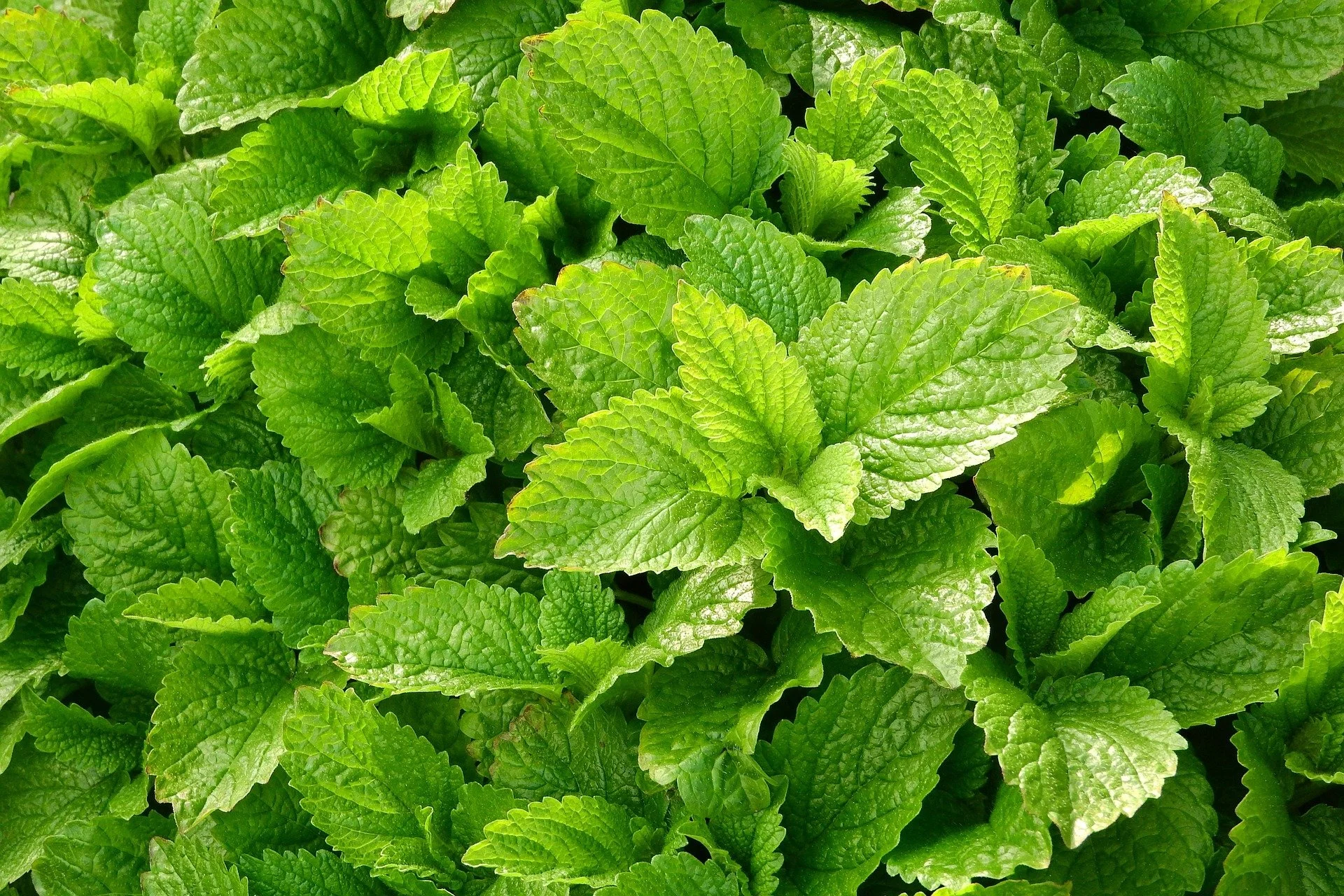
Lemon balm (Melissa officinalus)
Ginger (Zingiber officinale)
Ginger is also well known for its help with nausea and vomiting in pregnancy.
As an infusion, you can grate some fresh root or - if that’s too much of a hassle when you feel rotten - just place a thick slice of fresh root into a cup and pour over boiling water. Cover and let infuse for at least 10 mins and then sip slowly through the day.
As a midwife I have often heard that those suffering with nausea have been advised to eat ginger biscuits. I’d like to be clear that although ANY biscuit may settle your stomach, ginger biscuits do not have the medicinal properties required to help with nausea! Please try the infusion with fresh root - easy to make and ginger root is easily obtained from any supermarket.
Ginger root is a wonderful support for the womb. It is warming, and helps with circulation to the pelvis.
It is also antispasmodic and is beneficial when used in an essential oil as a massage during labour. Use a few drops into a carrier oil and ask someone to rub this into your lower back or over your belly to help restore energy.
Postpartum ginger is used to ease afterpains, which are often made stronger with breastfeeding in the first couple of days. Sipping ginger tea just before a feed can help ease these pains.
Ginger can also be used alongside other herbs such as cinnamon or cardamom as a tea to help restore energy in the postpartum period.
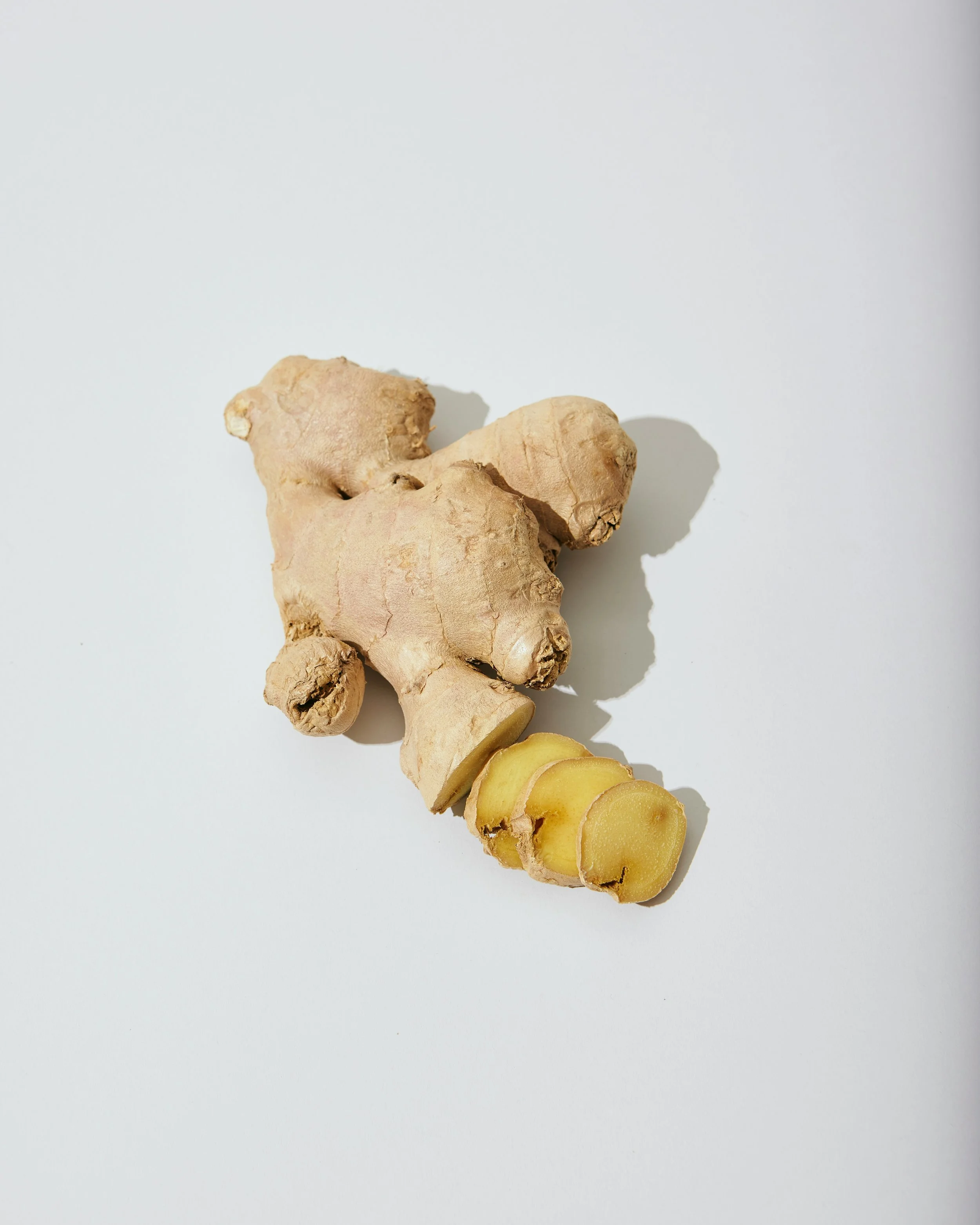
Fresh ginger root
Chamomile (Matricaria chamomilla)
Many people know chamomile for its calming effects.
It's true that it works to calm your system but in a different way than a nervine does.
Chamomile does not work directly on the nervous system - it is anticarminative and a bitter, so it works on the digestive system. We have nerve cells in our digestive tract and any disruptions in our digestion will affect our mood.
Chamomile acts quickly to soothe tension and relieve bloating in our gut, and is effective in relieving both a sluggish bowel and an overactive one. Chamomile and fennel tea after a meal can be very effective in relieving an irritable gut, and make us feel more calm and settled.
It works well to ease irritable moods as well, and combined with lavender can be used in a bath to ease both tired muscles and moods. For a bath you can either tie these herbs in a muslim and pop it in the tub like a giant teabag or make a pot of very strong tea with them and add that to the bath.
Both German and Roman chamomile can be easily grown in your garden and are also easy to find as teas.
As it relaxes smooth muscle, it is recommended to limit to one cup per day.
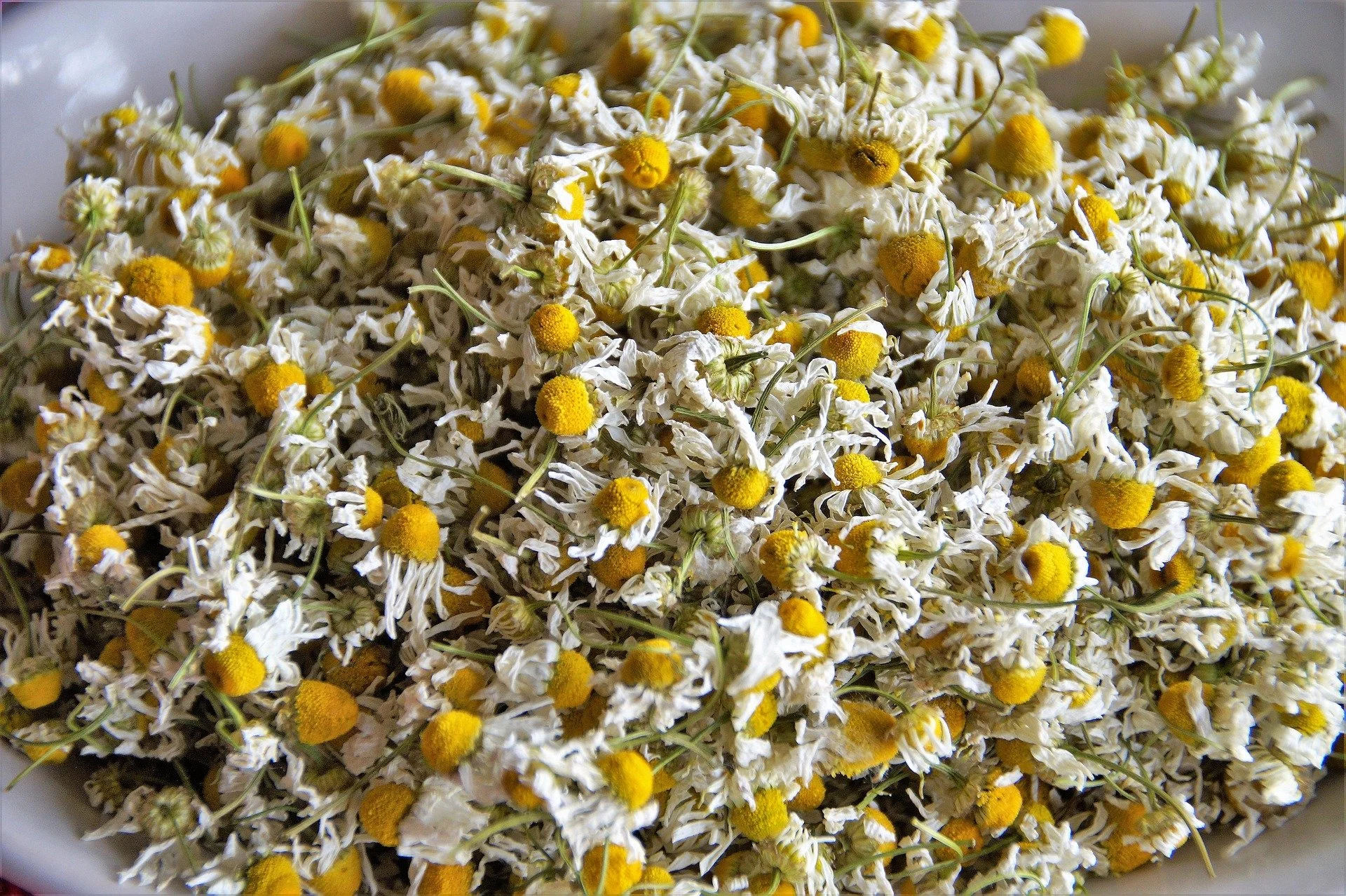
Dried chamomile flowers
Raspberry Leaf (Rubus ideaus)
How could I not include raspberry leaf? For a more detailed look at this wonderful herb, see my article here.
Raspberry leaf is a uterine tonic, so it nourishes the womb. It is high in magnesium and calcium and supports the muscle system, including the layer of muscle cells in the uterus called the myometrium. It is this layer of the womb that contracts during labour or menstruation to empty out the uterus.
Used regularly as a tea during pregnancy raspberry leaf can help prepare the womb to contract efficiently so it can release the baby. A well nourished uterus is more able to produce good quality contractions. So rather than having sore, crampy type contractions that are tiring but not so effective to get the babies out, raspberry leaf will help the uterus prepare for coordinated, strong and effective contractions.
I don’t mean to liken our bodies to machines by using words like efficient or effective to describe the birth process, but if you’ve ever witnessed a long, tiring labour with lots of contractions which don’t seem to get towards a birth, then you’ll appreciate that efficient and effective contractions are needed!
Effective contractions are also needed to reduce bleeding immediately after the birth, and to help the womb empty out completely in the first couple of weeks, reducing the risk of infection.
Raspberry leaf is also used to heal pelvic organ prolapse as it strengthens, tones and relaxes pelvic muscles.
And of course it is also a galactogogue - enriching and increasing breastmilk.
A prime herb for use throughout the reproductive life of those with wombs, raspberry leaf is also beneficial in menstruation, toning and relaxing muscles and helping ease pain and flooding.
As all herbs, regular use over time produces better results.
During pregnancy, one to three cups a day in the third trimester is recommended.

Raspberry leaf with fruit